NORAD’s third “incorrect” story to the 9/11 Commission was their testimony that the Langley fighters, scrambled eight minutes before the Pentagon was hit, “were scrambled to respond to the notifications about American 77, United 93, or both.” This certainly makes sense: there were planes targetting Washington. The jets that should have been sent for them were sent. But they were not sent up for that reason. As late as 9:35 no one in the defense system was aware of any real designs on Washington – or so says the Commission. Instead, they decided, “the notice NEADs received at 9:24 was that American 11 had not hit the World Trade Center and was heading for Washington, DC.” [1]
It was to intercept this ghost target that the Langley fighters took off at 9:30. The commission cited a taped NEADS call, conversations within the FAA system, contemporaneous logs from NEADS, Continental Region headquarters, and NORAD, among others. “Yet this response to a phantom aircraft was was not recounted in a single public timeline or statement issued by the FAA or Department of Defense. The inaccurate accounts created the impression that the Langley scramble was a logical response to an actual hijacked aircraft.” [2]
Here is the transcript of this call, placed from FAA’s Boston Center to NEADS at 9:21:
“FAA: Military, Boston Center. I just had a report that American 11 is still
in the air, and it’s on its way towards—heading towards Washington.
NEADS: Okay. American 11 is still in the air?
FAA: Yes.
NEADS: On its way towards Washington?
FAA: That was another—it was evidently another aircraft that hit the tower. That’s the latest report we have.
NEADS: Okay.
FAA: I’m going to try to confirm an ID for you, but I would assume he’s somewhere over, uh, either New Jersey or somewhere further south.
NEADS: Okay. So American 11 isn’t the hijack at all then, right?
FAA: No, he is a hijack.
NEADS: He—American 11 is a hijack?
FAA: Yes.
NEADS: And he’s heading into Washington?
FAA: Yes. This could be a third aircraft.” [3]
The NEADS technician who took this call from the FAA immediately passed the word to the mission crew commander, who reported to the NEADS battle commander: ”Okay, uh, American Airlines is still airborne. Eleven, the first guy, he’s heading towards Washington. Okay? I think we need to scramble Langley right now. And I’m gonna take the fighters from Otis, try to chase this guy down if I can find him.” The Otis pilots were not dragged from their just-established patrol of Manhattan, but they also were nearly sent after this non-existent target.
The Commission ultimately found themselves “unable to identify the source of this mistaken FAA information.” So let’s trace it back, based on the information that they had. In their report they note that the call was placed from FAA’s Boston Center to NEADS at 9:21, and in turn ”Boston Center had heard from FAA headquarters in Washington that American 11 was still airorne .” [4] So at some point prior to 9:20, someone at the national HQ in DC called this in to Boston, responsible for tracking these flights and already in contact with NEADS.
There are numerous possible explanations for this false report, and it wouldn’t have been the only one of the day. FAA Administrator Jane Garvey told Richard Clarke, after the first two planes had crashed, “we have reports of eleven aircraft off course or out of communications, maybe hijacked.” [2] Transportation Secretary Norman Mineta said “we probably had maybe about ten unaccounted for planes.” [3] Florida State Congressman Adam Putnam, who was aboard Air Force One with President Bush, who told him at 11:30 that there were six aircraft still unaccounted for. [4] In his bunker beneath the White House, Cheney had at least two possible run-ins with ghost planes, which he aggressively ordered shot down.
One explanation for these phantom flights centers on the presence in the radar system of false returns inserted for the morning’s war game Northern Vigilance. It’s unclear where these blips were showing up and on whose screens, but they were allegedly purged at about 9;00 am, as it became clear the US was under air attack and a clean slate was needed. Not that it helped much.
There are other possibilities as well. I’m guessing if this particular report of the Ghost Flight 11 is ever is explained, it’ll be something innocuous sounding, like this:
A controller at Boston center got a printed report – not a radar return – that American 77 was unaccounted for, missing from radar, possibly crashed or possibly headed to DC. But in the chaos after having seen American 11 disappear, he turns the 7s into 1s (optically easy to do, especially if the 1s are printed with pronounced serifs). He sees American 11 is missing from radar and possibly headed to DC and reports it as such. No radar track, so he can only guess – it was in New York, headed to DC… looking to the south of there...
But it could well be something more concrete than that, though we have to venture into weird land for the next post to see this possibility. Next: Mistaken FAA Info: Some or The?
Back to FAA Masterlist
Showing posts with label Flight 11. Show all posts
Showing posts with label Flight 11. Show all posts
Wednesday, May 2, 2007


Saturday, April 7, 2007
FAA: FEDERAL ATTACK ASSISTANCE? {masterlist}
This post is to organize those sub-posts, both up and coming, detailing aspects of the role of the Federal Aviation Administration (FAA) in the 9/11 attack carried out in their system.
(last Updated 3/22/07)

Active ATS threads on the FAA/phantom Flight 11/etc., from which I started this research:
"Evidence of a Cover-Up"
"Coverup of FAA role in gutting Pentagon Defense"
- FAA 1:The cover-up on page 34: the 9/11 Commission draws attention quietly to "incorrect" NORAD testimony on their links with FAA and the defense.
- FAA 2: The Phantom Flight 11: A quick look at the "mistaken FAA information" that AA 11 was headed to the capital, eclipsing all real threats.
- FAA 3: Mistaken FAA Info; Some or The? A fascinating look at the plane given a second chance, a half-hour after it ended, to distract defenders further south. I may have found the "smoking gun" memo (with a smoking gun in it) that put flight 11 back on the map.
- FAA 4: Authority: Unlimited but unsure: Ben Sliney's odd initiation
See also: First Day Jitters): FAA operations manager and NMCC director, besides JCS chairman, all first-day rookies on 9/11. Coincidence?
- FAA 5: Deserted Towers - coming eventually ...
- FAA 6: The Gutted defense of Washington (coming soon): The effect of this phantom flight and its part in the general failure of defense over the capital - see Failed Air Defense {masterlist} for existing analysis
- FAA 7: Human Error? (coming soon - clue: it's an inadequate excuse)
Additional, circumstantial evidence of odd FAA policy proposals in the months before 9/11 - shutting off radar and disarming pilots - two posts coming soon...
(last Updated 3/22/07)

Active ATS threads on the FAA/phantom Flight 11/etc., from which I started this research:
"Evidence of a Cover-Up"
"Coverup of FAA role in gutting Pentagon Defense"
- FAA 1:The cover-up on page 34: the 9/11 Commission draws attention quietly to "incorrect" NORAD testimony on their links with FAA and the defense.
- FAA 2: The Phantom Flight 11: A quick look at the "mistaken FAA information" that AA 11 was headed to the capital, eclipsing all real threats.
- FAA 3: Mistaken FAA Info; Some or The? A fascinating look at the plane given a second chance, a half-hour after it ended, to distract defenders further south. I may have found the "smoking gun" memo (with a smoking gun in it) that put flight 11 back on the map.
- FAA 4: Authority: Unlimited but unsure: Ben Sliney's odd initiation
See also: First Day Jitters): FAA operations manager and NMCC director, besides JCS chairman, all first-day rookies on 9/11. Coincidence?
- FAA 5: Deserted Towers - coming eventually ...
- FAA 6: The Gutted defense of Washington (coming soon): The effect of this phantom flight and its part in the general failure of defense over the capital - see Failed Air Defense {masterlist} for existing analysis
- FAA 7: Human Error? (coming soon - clue: it's an inadequate excuse)
Additional, circumstantial evidence of odd FAA policy proposals in the months before 9/11 - shutting off radar and disarming pilots - two posts coming soon...
Thursday, March 22, 2007
FAA IV: SLINEY'S AUTHORITY, UNLIMITED YET UNSURE
Ben Sliney’s Odd Initiation
Adam Larson
Caustic Logic / They Let It Happen
March 22 2007
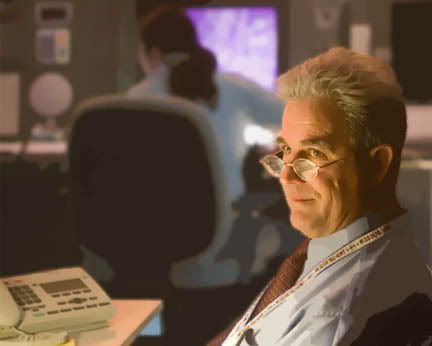
Besides the NMCC and Joint Chiefs of Staff, the Federal Aviation Administration, through whose system the 9/11 attacks occurred, was in weird hands on that weird day. Benedict Sliney had experience with FAA air traffic control dating back to 1964, but from the early 1980s took an 18-year hiatus to practice law in Manhattan. [1] He made a name for himself defending NY’s transit authority against passenger lawsuits, and once suing the FAA on behalf of fellow air traffic controllers. He gave up law in mid-2001, which he surrendered only, he says, after his 72-year-old secretary unexpectedly retired.
“I could not work without her, […] I wasn't going to continue. I didn't like law anyhow, it paid well, but it's very demanding in terms of time. I maintained my friendship of course with people in the FAA. The person in charge of the command center asked me, when I would complain about the law to come back to the FAA and I did.” [2]
This was apparently in mid-2001 when some combination of FAA connections, leadership skills, whatever, gave him a sudden career change back to the Administration, and straight to the top: National Operations Manager, a short, powerfully titled post described by USA Today as “the chess master of the air traffic system.” The paper explained “when he accepted the job overseeing the nation's airspace a few months earlier, Sliney wanted to be sure he had the power to do the job as he saw fit. "What is the limit of my authority?" he asked the man who had promoted him. "Unlimited," he was told.” [3] He got the job, and over the next several weeks set to re-learning the ropes and the two decades of technological and procedural changes since his old days.
It was hoped he’d learn enough to fulfill his normal, routine, functions. But Sliney’s new job also made him the man who would, theoretically, be responsible for such unprecedented things as ordering nationwide ground-stop of all air traffic, not that it ever had been an issue before. And he would also be the very guy in charge of requesting fighter assistance in the event of a suicide hijacking, on the off-chance that should ever be needed, which also had never ever happened once in the US. So perhaps understandably, these more esoteric duties were seemingly passed over a bit.
Tuesday being the slowest air travel day, little was expected (?) as Sliney clocked in for his first day at the FAA national operations center in Herndon Virginia, smack between Dulles Airport, the capital, and the Pentagon, at some time before 8:00 am on September 11. But it didn’t stay quiet for long; “It was a very short time,” Sliney later remembered, before he received the first clue this day would not be routine. At about 8:25 am, one of his assistant informed him “that they had an admission that a flight attendant was stabbed. Now it's starting to take a road that we hadn't been down before. It swiftly escalated after that.” [4] Somewhat less swiftly, the FAA response to the unfolding attack, largely overseen by Sliney, was measured, graduated:
8:15-20ish – Numerous calls sent to FAA from flight attendants Ong and Sweeney onboard Flight 11, clearly telling of a hijacking in progress.
8:24 - a transmission intended for the passengers on Flight 11 but accidentally sent system-wide by the hijackers, was received: "We have some planes. Just stay quiet and you will be OK." After Sliney learned of this line, USA Today reported, “the words will haunt him all morning. "We have some planes." Some? How many?” [5]
Before 8:46 – Sliney later described “an unidentified aircraft,” that is, with no transponder, “at 16,000 feet approaching New York City from the northwest at a pretty moderate ground speed of 300 knots. No one was working and we did not know who the aircraft was.” [6] Without transponders, we're told, it was hard to tell one of the thousands of blips from the next (which, if true, made the system completely useless)
8:46-8:50 - Sliney receives word from New York of a “small plane” crash into the World Trade Center. They turn on CNN in the control center. “That was no small plane, Sliney thinks.” Within minutes his suspicions were confirmed: it was the missing AA11. [7]
9:03 – The second plane, UA175, hits the second tower, and New York’s air space is ordered shut down, a multi-state area cleared of air traffic in the first such unprecedented move of the morning. Realizing this is an attack, and twenty minutes into it, Sliney scrambles to make up for lost time. It was time for bold – but not hasty - action.
9:15 – American Airlines orders no more AA takeoffs in the northeast. No concrete moves from Sliney in Herndon yet, just listing all troubled, possibly hijacked flights on a dry erase board. “The moves aren't strong enough for some of the air traffic specialists at the center,” says USA Today, “who bombard Sliney with advice. "Just stop everything! Just stop it!" The words ring true to Sliney.” [8] Haunted by knowledge of more planes, Sliney responds. Seconds tick by. (one mississippi, two mississippi, three mississippi... ten more minutes pass)
9:25 - AA77 has now been unaccounted for as well, for thirty minutes. Sliney issues another unprecedented order: full groundstop. No FAA controlled flights are to take off, anywhere in the country. The skies are full enough, but it wasn't yet time to order them cleared altogether.
“Amid the shouts and chatter and conflicting reports,” USA Today reported, Sliney “reminds himself: Don't jump to conclusions. Sort it out.” Indeed, deliberation seems his strong point: “since the second Trade Center tower was hit, Sliney has considered bringing every flight down,” the paper reported. It wasn’t until after the Pentagon was hit with AA77 at 9:38 that “the manager in charge of the nation's air traffic system is certain. He has no time to consult with FAA officials in Washington,” and made his snap decision all on his own to have all air traffic get out of the sky ASAP. "Order everyone to land! Regardless of destination!" Sliney shouted, since shouting helps orders get back in time to when they might have done some good. [1] The 9/11 Commission agreed that Sliney “ordered all FAA facilities to instruct all aircraft to land at the nearest airport” at exactly 9:42, 56 minutes after the first strike of the war against his native New York, an hour and twenty minutes after the first hijacking was known of.
Is that slow or fast? There’s not much precedence to judge by, but a faster response is at least feasible, by Sliney’s own account. US News reported in June 2004 that “he says he would have stopped everyone sooner,” had he not been left out of the pre-9/11 terror warning loop. Ominous predictions that had been issued that summer about al Qaeda’s potential air designs “never reached key people like Benedict Sliney.” [10] Whoever preceded Sliney in the NOM position likely had been aware of the threat, considering for example, the August 2001 CIA memo "Islamic Extremist Learns to Fly," and the high-level meeting Richard Clarke called on July 5, including FAA, and warning “something really spectacular is going to happen here, and it’s going to happen soon.” But the manager who might’ve known the score on what to expect, and probably had a better understanding of what could be done in response, was just not working out. And his replacement, being a first-day rookie not clued into the earlier threat assessments, was in effect a blank spacer inserted, by chance we are to believe, into a key spot in the air defense system.
Sliney was not the top link at FAA, of course. He had superiors like FAA administrator Jane Garvey and her deputy Monte Belger, and running all the way up to Transportation Secretary Norman “fuck pilot discretion” Mineta, in the PEOC beneath the White House with Cheney and Rice. But Sliney was the top hands-on guy with radar screens in front of him, called on to make major decisions that morning beside the ground stop. He told the 9/11 Commission about his first call with NORAD, at some point before 8:46:
“NORAD […] asked me if I were requesting a military intervention. And I indicated to NORAD that I'm advising you of the - of the facts of this particular incident. I'm not requesting anything. I wasn't sure I even had the authority to request such a thing. And when the lady persisted at NORAD, I asked her if I could call her back and I went to the domestic event net, which is available to all facilities and most of the major facilities around it, and I queried NORAD and the FAA headquarters as to whether or not I had such authority to ask for intervention by the military or a scramble on this particular aircraft, and they did agree that I had such authority after a discussion on the virtues of collaboration. However, I indicated further when I agreed that we should collaborate on such decisions, but if time did not permit it, did I have that authority, I persisted in that and they said that I did. I didn't know that prior to that moment in time.” [11]
CNN’s Paula Zahn explained further “Mr. Sliney says these conversations took several minutes and by the time he received an answer, the aircraft was past Manhattan,” meaning, I presume, past gone into the WTC. [12] Sliney had unlimited authority but like Bullwinkle the moose, he didn’t know his own strength, at least not precisely enough to do much of use on 9/11. He learned his powers eventually, of course, but too late. I’m not sure how long after 9/11 he held the NOM job, but by the time of his candid and well-covered May 2004 testimony to the 9/11 Commission, he had switched over to Operations Manager for the New York Terminal Radar Approach Control, another slot that had been vital on 9/11. This shows he’s serious about FAA; he didn’t just come on just for 9/11. That would look suspicious...
Pure coincidence is the official reason such man was put into such a spot at just that time, but the agency of chance is already strained enough to explain the events of that morning without adding this to its burden. If indeed Sliney were placed to help facilitate the attacks, it’s important to consider whether his part was really central or important enough to warrant the risk of dropping the spacer into his spot less than an hour before the attacks began. Delays in ground stop and military escorts seem to have had little overall effect, only helping keep the skies as cluttered as normal, limiting radar tracking. Even swift action would not clear the skies immediately anyway. This is secondary. As for his requests for fighter assistance, with or without Sliney’s involvement, fighters were off the ground just after the first plane hit, which is reasonably swift. Even if scrambled sooner, the total disempowerment of the defending fighter pilots was beyond his mandate and would have happened either way. His well-timed placement then serves as another redundant screw-up that helps cancel out the culpability of the others. The precision of the placement makes it also seem a possible distraction, but one engineered in advance, which is telling.
Curiously, Ben Sliney was able to regain the limelight again and add another title to his resume with another unexpected job offer – an actor, playing the part of himself in the 2006 film Flight 93 (which I have yet to see). He had become a piece of history, an ironic 9/11 artifact, the first-day guy! Man what a first day; Murphy’s law, we can all relate to that! He was initially brought on by director Paul Greengrass as an adviser on re-enacting his part of the morning of 9/11 – what it was like at the center, how to accurately reflect the events. Oddly parallel to his actual switch back to FAA moths before 9/11 as a last-minute replacement, Sliney explained in a 2006 interview: “they hired an actor to play me. And he was having a little difficulty with it. And after two days, they asked me to do it. I got a note under the door. 5 in the morning, I was getting ready to go to the set, could you please bring your suit, tie, shoes. At the bottom it said “this is not a test. This is not a drill.” [13]
---------
Back to "Federal Attack Assistance?" Masterlist
Sources:
[1], [2], [4], [13] United 93: An Interview with National Operations Manager Ben Sliney
By Tonisha Johnson April 2006. http://www.blackfilm.com/20060421/features/bensliney.shtml
[3] Adams, Marilyn, Alan Levin and Blake Morrison. “Part II: No one was sure if hijackers were on board.” USA Today. Posting date unlisted.
http://www.usatoday.com/news/sept11/2002-08-12-hijacker-daytwo_x.htm
[5], [7], [8], [9] Part I: Terror attacks brought drastic decision: Clear the skies
By Alan Levin, Alan, Marilyn Adams and Blake Morrison, USA Today. August 13 2002.
http://www.usatoday.com/news/sept11/2002-08-12-clearskies_x.htm
[6], [11] Benedict Sliney Testimony 9/11 Commission. May 21 2004. Via CNN. http://transcripts.cnn.com/TRANSCRIPTS/0406/17/pzn.00.html
[10] Levine, Samantha. “In the skies, a scary 'failure of imagination.” US News And World Report. June 28 2004. Posted June 20 2004. http://www.usnews.com/usnews/news/articles/040628/28nine11.b.htm
[12] Paula Zahn Now. “Chilling Audio From 9/11 Hijack Played at Hearing.” Aired June 17, 2004. Transcript: http://transcripts.cnn.com/TRANSCRIPTS/0406/17/pzn.00.html
Adam Larson
Caustic Logic / They Let It Happen
March 22 2007
 |
Besides the NMCC and Joint Chiefs of Staff, the Federal Aviation Administration, through whose system the 9/11 attacks occurred, was in weird hands on that weird day. Benedict Sliney had experience with FAA air traffic control dating back to 1964, but from the early 1980s took an 18-year hiatus to practice law in Manhattan. [1] He made a name for himself defending NY’s transit authority against passenger lawsuits, and once suing the FAA on behalf of fellow air traffic controllers. He gave up law in mid-2001, which he surrendered only, he says, after his 72-year-old secretary unexpectedly retired.
“I could not work without her, […] I wasn't going to continue. I didn't like law anyhow, it paid well, but it's very demanding in terms of time. I maintained my friendship of course with people in the FAA. The person in charge of the command center asked me, when I would complain about the law to come back to the FAA and I did.” [2]
This was apparently in mid-2001 when some combination of FAA connections, leadership skills, whatever, gave him a sudden career change back to the Administration, and straight to the top: National Operations Manager, a short, powerfully titled post described by USA Today as “the chess master of the air traffic system.” The paper explained “when he accepted the job overseeing the nation's airspace a few months earlier, Sliney wanted to be sure he had the power to do the job as he saw fit. "What is the limit of my authority?" he asked the man who had promoted him. "Unlimited," he was told.” [3] He got the job, and over the next several weeks set to re-learning the ropes and the two decades of technological and procedural changes since his old days.
It was hoped he’d learn enough to fulfill his normal, routine, functions. But Sliney’s new job also made him the man who would, theoretically, be responsible for such unprecedented things as ordering nationwide ground-stop of all air traffic, not that it ever had been an issue before. And he would also be the very guy in charge of requesting fighter assistance in the event of a suicide hijacking, on the off-chance that should ever be needed, which also had never ever happened once in the US. So perhaps understandably, these more esoteric duties were seemingly passed over a bit.
Tuesday being the slowest air travel day, little was expected (?) as Sliney clocked in for his first day at the FAA national operations center in Herndon Virginia, smack between Dulles Airport, the capital, and the Pentagon, at some time before 8:00 am on September 11. But it didn’t stay quiet for long; “It was a very short time,” Sliney later remembered, before he received the first clue this day would not be routine. At about 8:25 am, one of his assistant informed him “that they had an admission that a flight attendant was stabbed. Now it's starting to take a road that we hadn't been down before. It swiftly escalated after that.” [4] Somewhat less swiftly, the FAA response to the unfolding attack, largely overseen by Sliney, was measured, graduated:
8:15-20ish – Numerous calls sent to FAA from flight attendants Ong and Sweeney onboard Flight 11, clearly telling of a hijacking in progress.
8:24 - a transmission intended for the passengers on Flight 11 but accidentally sent system-wide by the hijackers, was received: "We have some planes. Just stay quiet and you will be OK." After Sliney learned of this line, USA Today reported, “the words will haunt him all morning. "We have some planes." Some? How many?” [5]
Before 8:46 – Sliney later described “an unidentified aircraft,” that is, with no transponder, “at 16,000 feet approaching New York City from the northwest at a pretty moderate ground speed of 300 knots. No one was working and we did not know who the aircraft was.” [6] Without transponders, we're told, it was hard to tell one of the thousands of blips from the next (which, if true, made the system completely useless)
8:46-8:50 - Sliney receives word from New York of a “small plane” crash into the World Trade Center. They turn on CNN in the control center. “That was no small plane, Sliney thinks.” Within minutes his suspicions were confirmed: it was the missing AA11. [7]
9:03 – The second plane, UA175, hits the second tower, and New York’s air space is ordered shut down, a multi-state area cleared of air traffic in the first such unprecedented move of the morning. Realizing this is an attack, and twenty minutes into it, Sliney scrambles to make up for lost time. It was time for bold – but not hasty - action.
9:15 – American Airlines orders no more AA takeoffs in the northeast. No concrete moves from Sliney in Herndon yet, just listing all troubled, possibly hijacked flights on a dry erase board. “The moves aren't strong enough for some of the air traffic specialists at the center,” says USA Today, “who bombard Sliney with advice. "Just stop everything! Just stop it!" The words ring true to Sliney.” [8] Haunted by knowledge of more planes, Sliney responds. Seconds tick by. (one mississippi, two mississippi, three mississippi... ten more minutes pass)
9:25 - AA77 has now been unaccounted for as well, for thirty minutes. Sliney issues another unprecedented order: full groundstop. No FAA controlled flights are to take off, anywhere in the country. The skies are full enough, but it wasn't yet time to order them cleared altogether.
“Amid the shouts and chatter and conflicting reports,” USA Today reported, Sliney “reminds himself: Don't jump to conclusions. Sort it out.” Indeed, deliberation seems his strong point: “since the second Trade Center tower was hit, Sliney has considered bringing every flight down,” the paper reported. It wasn’t until after the Pentagon was hit with AA77 at 9:38 that “the manager in charge of the nation's air traffic system is certain. He has no time to consult with FAA officials in Washington,” and made his snap decision all on his own to have all air traffic get out of the sky ASAP. "Order everyone to land! Regardless of destination!" Sliney shouted, since shouting helps orders get back in time to when they might have done some good. [1] The 9/11 Commission agreed that Sliney “ordered all FAA facilities to instruct all aircraft to land at the nearest airport” at exactly 9:42, 56 minutes after the first strike of the war against his native New York, an hour and twenty minutes after the first hijacking was known of.
Is that slow or fast? There’s not much precedence to judge by, but a faster response is at least feasible, by Sliney’s own account. US News reported in June 2004 that “he says he would have stopped everyone sooner,” had he not been left out of the pre-9/11 terror warning loop. Ominous predictions that had been issued that summer about al Qaeda’s potential air designs “never reached key people like Benedict Sliney.” [10] Whoever preceded Sliney in the NOM position likely had been aware of the threat, considering for example, the August 2001 CIA memo "Islamic Extremist Learns to Fly," and the high-level meeting Richard Clarke called on July 5, including FAA, and warning “something really spectacular is going to happen here, and it’s going to happen soon.” But the manager who might’ve known the score on what to expect, and probably had a better understanding of what could be done in response, was just not working out. And his replacement, being a first-day rookie not clued into the earlier threat assessments, was in effect a blank spacer inserted, by chance we are to believe, into a key spot in the air defense system.
Sliney was not the top link at FAA, of course. He had superiors like FAA administrator Jane Garvey and her deputy Monte Belger, and running all the way up to Transportation Secretary Norman “fuck pilot discretion” Mineta, in the PEOC beneath the White House with Cheney and Rice. But Sliney was the top hands-on guy with radar screens in front of him, called on to make major decisions that morning beside the ground stop. He told the 9/11 Commission about his first call with NORAD, at some point before 8:46:
“NORAD […] asked me if I were requesting a military intervention. And I indicated to NORAD that I'm advising you of the - of the facts of this particular incident. I'm not requesting anything. I wasn't sure I even had the authority to request such a thing. And when the lady persisted at NORAD, I asked her if I could call her back and I went to the domestic event net, which is available to all facilities and most of the major facilities around it, and I queried NORAD and the FAA headquarters as to whether or not I had such authority to ask for intervention by the military or a scramble on this particular aircraft, and they did agree that I had such authority after a discussion on the virtues of collaboration. However, I indicated further when I agreed that we should collaborate on such decisions, but if time did not permit it, did I have that authority, I persisted in that and they said that I did. I didn't know that prior to that moment in time.” [11]
CNN’s Paula Zahn explained further “Mr. Sliney says these conversations took several minutes and by the time he received an answer, the aircraft was past Manhattan,” meaning, I presume, past gone into the WTC. [12] Sliney had unlimited authority but like Bullwinkle the moose, he didn’t know his own strength, at least not precisely enough to do much of use on 9/11. He learned his powers eventually, of course, but too late. I’m not sure how long after 9/11 he held the NOM job, but by the time of his candid and well-covered May 2004 testimony to the 9/11 Commission, he had switched over to Operations Manager for the New York Terminal Radar Approach Control, another slot that had been vital on 9/11. This shows he’s serious about FAA; he didn’t just come on just for 9/11. That would look suspicious...
Pure coincidence is the official reason such man was put into such a spot at just that time, but the agency of chance is already strained enough to explain the events of that morning without adding this to its burden. If indeed Sliney were placed to help facilitate the attacks, it’s important to consider whether his part was really central or important enough to warrant the risk of dropping the spacer into his spot less than an hour before the attacks began. Delays in ground stop and military escorts seem to have had little overall effect, only helping keep the skies as cluttered as normal, limiting radar tracking. Even swift action would not clear the skies immediately anyway. This is secondary. As for his requests for fighter assistance, with or without Sliney’s involvement, fighters were off the ground just after the first plane hit, which is reasonably swift. Even if scrambled sooner, the total disempowerment of the defending fighter pilots was beyond his mandate and would have happened either way. His well-timed placement then serves as another redundant screw-up that helps cancel out the culpability of the others. The precision of the placement makes it also seem a possible distraction, but one engineered in advance, which is telling.
Curiously, Ben Sliney was able to regain the limelight again and add another title to his resume with another unexpected job offer – an actor, playing the part of himself in the 2006 film Flight 93 (which I have yet to see). He had become a piece of history, an ironic 9/11 artifact, the first-day guy! Man what a first day; Murphy’s law, we can all relate to that! He was initially brought on by director Paul Greengrass as an adviser on re-enacting his part of the morning of 9/11 – what it was like at the center, how to accurately reflect the events. Oddly parallel to his actual switch back to FAA moths before 9/11 as a last-minute replacement, Sliney explained in a 2006 interview: “they hired an actor to play me. And he was having a little difficulty with it. And after two days, they asked me to do it. I got a note under the door. 5 in the morning, I was getting ready to go to the set, could you please bring your suit, tie, shoes. At the bottom it said “this is not a test. This is not a drill.” [13]
---------
Back to "Federal Attack Assistance?" Masterlist
Sources:
[1], [2], [4], [13] United 93: An Interview with National Operations Manager Ben Sliney
By Tonisha Johnson April 2006. http://www.blackfilm.com/20060421/features/bensliney.shtml
[3] Adams, Marilyn, Alan Levin and Blake Morrison. “Part II: No one was sure if hijackers were on board.” USA Today. Posting date unlisted.
http://www.usatoday.com/news/sept11/2002-08-12-hijacker-daytwo_x.htm
[5], [7], [8], [9] Part I: Terror attacks brought drastic decision: Clear the skies
By Alan Levin, Alan, Marilyn Adams and Blake Morrison, USA Today. August 13 2002.
http://www.usatoday.com/news/sept11/2002-08-12-clearskies_x.htm
[6], [11] Benedict Sliney Testimony 9/11 Commission. May 21 2004. Via CNN. http://transcripts.cnn.com/TRANSCRIPTS/0406/17/pzn.00.html
[10] Levine, Samantha. “In the skies, a scary 'failure of imagination.” US News And World Report. June 28 2004. Posted June 20 2004. http://www.usnews.com/usnews/news/articles/040628/28nine11.b.htm
[12] Paula Zahn Now. “Chilling Audio From 9/11 Hijack Played at Hearing.” Aired June 17, 2004. Transcript: http://transcripts.cnn.com/TRANSCRIPTS/0406/17/pzn.00.html
Thursday, March 15, 2007
FIRST DAY JITTERS
SLINEY, LEIDIG, MYERS: THREE DEFENSE LINKS SWAPPED AT THE LAST MINUTE
Adam Larson
Caustic Logic/They Let It Happen
January 1 2007
Last Update: 3/19
9/11 was just such a weird day, who could think it relevant that among the other oddities of that morning The FAA was being run by a first-day rookie? Benedict Sliney was just getting his feet wet as the National Operations Manager when four civilian airliners were hijacked amid confused reports of about a dozen possible hijacks. While Sliney had superiors like FAA administrator Jane Garvey, he was called on to make major decisions that morning. He told the 9/11 Commission: “NORAD […] asked ME if I were requesting military intervention. And I indicated to NORAD that I’m advising you of the facts of this particular incident – I’m not requesting anything. I wasn’t sure I even had the authority to request such a thing.” [1] Perhaps he hadn’t watched the training video closely enough the day before.
But was the Chain of Command he and the others at FAA informing any better organized? The National Military Command Center (NMCC), beneath the Pentagon, is the command and control “nerve center” for the military leadership if America comes under attack. While this usually does not happen, the NMCC sits ready, watched over and coordinated by the Deputy Director of Operations (DDO) and is used for other activities requiring centralized coordination – like passing on requests for fighter assistance in case of a hijacking and, I’d guess, coordinating air-based War games, of which there were at least five on 9/11.
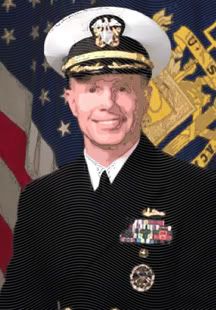
Army Brigadier General Montague Winfield was originally slated to be in charge of the NMCC that morning, but the previous day he had decided to take some time off, asking a recently qualified but inexperienced rookie, Navy Captain Charles Leidig, to stand in as DDO in the morning. This is confirmed by Leidig’s own testimony to the 9/11 Commission. His written statement was the shortest they received at just over one page, large font, double spaced. It stated blandly “on 10 September 2001, Brigadier General Winfield, US Army, asked that I stand a portion of his duty […] on the following day. I agreed and relieved Brigadier General Winfield at 0830 on 11 September 2001.” [2] At that very minute, the first plane was right between its hijacking (about 8:15) and its impact with the WTC (8:46).
The remarkable request was presumably for some other, lesser, reason. But Leidig’s rookie status (only qualified to be DDO a few weeks earlier) and the emerging crisis did not interrupt the transfer and Winfield left. I can’t say whether this had any operational role in 9/11 or the lack of defense against it, or was related to the air-based war games that have been acknowledged, but both seem probable. And while certainly the timing of this admitted September 10 request is beyond coincidence, none of the involved parties have offered any explanation - it has remained both curiously open and unexplained.
But war games or no, Leidig’s job there wound up more than a drill. As the 9-11 Commission’s final report explained “the job of the NMCC in such an emergency is to gather the relevant parties and establish the chain of command between the national command authority […] and those who need to carry out their orders.” [3] This includes, among others, the Defense Secretary and JCS Chairman. Acting Joint Chiefs Chairman, Air Force General Richard Myers – like Leidig, filling in as of the morning of 9/11 – claims total ignorance of the attack until about 9:40, and the 9/11 Commission confirmed that he arrived at the NMCC and joined the conference in session just before 10:00, over an hour after the attack began and just as it was ending.
By the time Myers arrived at 10:00, regular DDO Montague Winfield had taken the center over again from Leidig, but Rumsfeld, the middle link in the “national command authority” chain Leidig was tasked with “gathering,” was still MIA. Winfield would later state “for 30 minutes we couldn't find him. And just as we began to worry, he walked into the door” at 10:30 – nearly a half hour after the attack was over. [4] While he’d been at the building all morning, officially he’d been too busy loading injured into ambulances for the TV cameras to take his part in the defense, though accounts of his whereabouts vary greatly.

So here is the graphic representation of Leidig’s unorthodox stand-in shift and the results of his work to “gather the relevant parties” during the 111 minutes that hijacked attack craft were attacking the heart of America’s financial and military might. By whatever confluence of factors, the room was kept vacant of upper leadership until Leidig relenquished control and the attack ended. We should be left wondering why the parties weren’t gathered, what was so special about Leidig that he had to be there to fail to gather them, and who knew the day before just how badly he would fail when inserted in the morning?
Leidig did try to do things on his own as Myers and Rumsfeld kept their distance, initiating a phone bridge and significant event conference at 9:29, a line that the 9/11 Commission clarified did not have FAA on it. One minute later, Leidig announced that he was just told American 11 was still airborne. [5] It was also precisely at 9:30 that the Langley fighter pilots finally took off, and so Leidig gave them this new ghost target, which wound up distracting them from the very real Flight 77 as it closed in on his own location and entered radar screens again. The fighter pilots were never informed of the attack plane until after they saw smoke rising from the Pentagon after 9:37. The Commission admitted the FAA was not on the line with Leidig, but blames them anyway: “we have not been able to identify the source of this mistaken FAA information,” and left it at that [emphasis mine]. [6]
Since that day, Leidig has been promoted – first to Commandant of Midshipmen in September 2003, then to U.S. Defense Representative to the Pacific micro-states. Later he assumed command of U.S. Naval Forces Marianas and Navy Region Marianas and advanced to Rear Admiral status. Leidig is recipient of numerous service medals over his distinguished career, none specifically for his service on 9/11, of which his official Navy bio makes no mention whatsoever. [7]
[After I posted this, it occured to me to state I'm not accusing Adm Leidig of anything in particular, nor Sliney, Myers, or even Rumsfeld individually. I only present this in the public interest to help clarify the record - nothing personal.]
Sources:
[1] National Commission on Terrorist Attacks Upon the United States. Panel one, Day two of 12th public hearing. Staff statements on the military and civilian aviation authorities. Washington D.C. June 17, 2004. http://govinfo.library.unt.edu/911/archive/hearing12/9-11Commission_Hearing_2001-06-17.htm
[2] Flocco, Tom. "NMCC ops director asked substitute on 9-10 to stand his watch on 9-11.” Prison Planet. June 18 2004. http://www.prisonplanet.com/articles/june2004/061804askedsubstitute.htm
[3] 9/11 Commission Final Report. Page 37.
[4] Thompson, Paul and the Center for Cooperative Research. “The Terror Timeline.” New York. Regan Books. 2004. Page 456.
[5] 9/11 Commission Final Report. Page 37.
[6] 9/11 Commission Final Report. Page 26
[7] Commander Naval Forces Marianas: Rear Admiral Charles J. Leidig. US Navy bio. http://www.guam.navy.mil/bio_adm.htm
Adam Larson
Caustic Logic/They Let It Happen
January 1 2007
Last Update: 3/19
9/11 was just such a weird day, who could think it relevant that among the other oddities of that morning The FAA was being run by a first-day rookie? Benedict Sliney was just getting his feet wet as the National Operations Manager when four civilian airliners were hijacked amid confused reports of about a dozen possible hijacks. While Sliney had superiors like FAA administrator Jane Garvey, he was called on to make major decisions that morning. He told the 9/11 Commission: “NORAD […] asked ME if I were requesting military intervention. And I indicated to NORAD that I’m advising you of the facts of this particular incident – I’m not requesting anything. I wasn’t sure I even had the authority to request such a thing.” [1] Perhaps he hadn’t watched the training video closely enough the day before.
But was the Chain of Command he and the others at FAA informing any better organized? The National Military Command Center (NMCC), beneath the Pentagon, is the command and control “nerve center” for the military leadership if America comes under attack. While this usually does not happen, the NMCC sits ready, watched over and coordinated by the Deputy Director of Operations (DDO) and is used for other activities requiring centralized coordination – like passing on requests for fighter assistance in case of a hijacking and, I’d guess, coordinating air-based War games, of which there were at least five on 9/11.
 |
The remarkable request was presumably for some other, lesser, reason. But Leidig’s rookie status (only qualified to be DDO a few weeks earlier) and the emerging crisis did not interrupt the transfer and Winfield left. I can’t say whether this had any operational role in 9/11 or the lack of defense against it, or was related to the air-based war games that have been acknowledged, but both seem probable. And while certainly the timing of this admitted September 10 request is beyond coincidence, none of the involved parties have offered any explanation - it has remained both curiously open and unexplained.
But war games or no, Leidig’s job there wound up more than a drill. As the 9-11 Commission’s final report explained “the job of the NMCC in such an emergency is to gather the relevant parties and establish the chain of command between the national command authority […] and those who need to carry out their orders.” [3] This includes, among others, the Defense Secretary and JCS Chairman. Acting Joint Chiefs Chairman, Air Force General Richard Myers – like Leidig, filling in as of the morning of 9/11 – claims total ignorance of the attack until about 9:40, and the 9/11 Commission confirmed that he arrived at the NMCC and joined the conference in session just before 10:00, over an hour after the attack began and just as it was ending.
By the time Myers arrived at 10:00, regular DDO Montague Winfield had taken the center over again from Leidig, but Rumsfeld, the middle link in the “national command authority” chain Leidig was tasked with “gathering,” was still MIA. Winfield would later state “for 30 minutes we couldn't find him. And just as we began to worry, he walked into the door” at 10:30 – nearly a half hour after the attack was over. [4] While he’d been at the building all morning, officially he’d been too busy loading injured into ambulances for the TV cameras to take his part in the defense, though accounts of his whereabouts vary greatly.
So here is the graphic representation of Leidig’s unorthodox stand-in shift and the results of his work to “gather the relevant parties” during the 111 minutes that hijacked attack craft were attacking the heart of America’s financial and military might. By whatever confluence of factors, the room was kept vacant of upper leadership until Leidig relenquished control and the attack ended. We should be left wondering why the parties weren’t gathered, what was so special about Leidig that he had to be there to fail to gather them, and who knew the day before just how badly he would fail when inserted in the morning?
Leidig did try to do things on his own as Myers and Rumsfeld kept their distance, initiating a phone bridge and significant event conference at 9:29, a line that the 9/11 Commission clarified did not have FAA on it. One minute later, Leidig announced that he was just told American 11 was still airborne. [5] It was also precisely at 9:30 that the Langley fighter pilots finally took off, and so Leidig gave them this new ghost target, which wound up distracting them from the very real Flight 77 as it closed in on his own location and entered radar screens again. The fighter pilots were never informed of the attack plane until after they saw smoke rising from the Pentagon after 9:37. The Commission admitted the FAA was not on the line with Leidig, but blames them anyway: “we have not been able to identify the source of this mistaken FAA information,” and left it at that [emphasis mine]. [6]
Since that day, Leidig has been promoted – first to Commandant of Midshipmen in September 2003, then to U.S. Defense Representative to the Pacific micro-states. Later he assumed command of U.S. Naval Forces Marianas and Navy Region Marianas and advanced to Rear Admiral status. Leidig is recipient of numerous service medals over his distinguished career, none specifically for his service on 9/11, of which his official Navy bio makes no mention whatsoever. [7]
[After I posted this, it occured to me to state I'm not accusing Adm Leidig of anything in particular, nor Sliney, Myers, or even Rumsfeld individually. I only present this in the public interest to help clarify the record - nothing personal.]
Sources:
[1] National Commission on Terrorist Attacks Upon the United States. Panel one, Day two of 12th public hearing. Staff statements on the military and civilian aviation authorities. Washington D.C. June 17, 2004. http://govinfo.library.unt.edu/911/archive/hearing12/9-11Commission_Hearing_2001-06-17.htm
[2] Flocco, Tom. "NMCC ops director asked substitute on 9-10 to stand his watch on 9-11.” Prison Planet. June 18 2004. http://www.prisonplanet.com/articles/june2004/061804askedsubstitute.htm
[3] 9/11 Commission Final Report. Page 37.
[4] Thompson, Paul and the Center for Cooperative Research. “The Terror Timeline.” New York. Regan Books. 2004. Page 456.
[5] 9/11 Commission Final Report. Page 37.
[6] 9/11 Commission Final Report. Page 26
[7] Commander Naval Forces Marianas: Rear Admiral Charles J. Leidig. US Navy bio. http://www.guam.navy.mil/bio_adm.htm
Friday, March 9, 2007
FAA III: MISTAKEN FAA INFO: SOME OR THE?
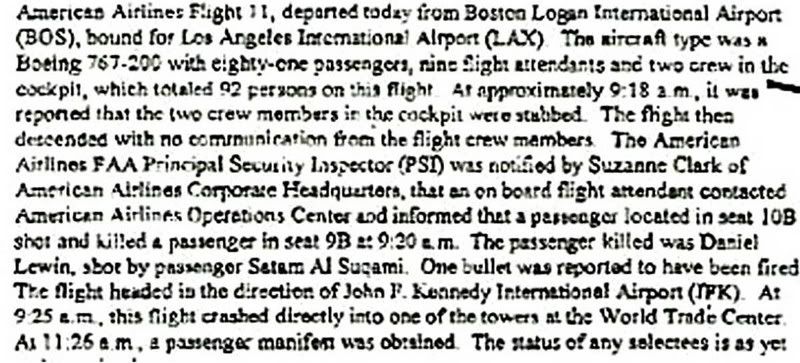
Now let’s look at a report from onboard Flight 11, reportedly placed by a flight attendant just seven minutes before impact: Two crew members in the cockpit – presumably pilot and co-pilot – were stabbed. Communications were briefly cut, then another call came two minutes later - news came across that “a passenger in seat 10B shot and killed a passenger in seat 9B” with one shot fired. The killer was pegged as muscle hijacker Satam al Suqami. The victim was Daniel Lewin, founder Akamai tech and Israeli special agent, possibly an international counter-terror operative. “That call was put through by Suzanne Clark of FAA corporate headquarters,” an early FAA memo reported, supposedly based on flight attendant reports she’d just received (from who precisely is unsure). Five minutes later, the memo explains, Flight 11 crashed into the World Trade Center and disappeared for good.
This memo was released as a first draft, but never released in final form, as it had by then become “protected information,” and the final FAA record reflects no gunshots fired anywhere that day. Worldnet ran an article about this in February 2002, explaining that “the FAA, while confirming the document is authentic, claims the report of Lewin's shooting, written several hours after the Sept. 11 hijackings, was premature and inaccurate.” While this call mentioning the gunshot was not recorded, an FBI account of it was leaked to the media, though eventually eclipsed by another, recorded call from attendant Amy Sweeney. In this account, and referring to the same two passengers, “a hijacker also cut the throat of a business-class passenger, and he appears to be dead."
There are different opinions on the story change from firearm to blade, from FAA cover-up of abysmal security to simple communications errors. The 9/11 Commission’s Final Report made several mentions of the possibility of a gun on board Flight 93 (which they found in error), but no mention at all of any gun on AA11. It was completely ignored.
But the most interesting thing about this discredited FAA memo for the study at hand is the times listed in it: the calls from the flight were reportedly placed at 9:18 and 9;20, and five minutes later, “at 9:25 am, this flight crashed directly into one of the towers of the world trade center.” The actual crash was at 8:46, 32 minutes earlier. The 9/11 Commission just presumed a typo it seems, and shifted the time frame back an hour, placing two calls from Amy Sweeney at 8:19 and 8:21. So following this pattern, if we shift the impact back an hour as well, the plane would have crashed at 8:26. So now we have two separate “typos” and an impact time out of alignment with the others. Time zone lag is the not a reason – it was 9:25 nowhere in the world when Flight 11 ended.
But of course what was happening at 9;25 was that minutes-old reports that Flight 11 was airborne being passed on through the air defense system. Are these 9:18-9:20 report of violence on the ghost flight 11 what actually got Flight 11 reported as airborne at that time? It’s the kind of thing that would make a controller have to “presume” where the plane actually was, since no one was actually seeing it? Or is it just a coincidence that this incongruous memo matches both the plane and time of this noted but un-examined “mistaken FAA information,” as well as its origins at national HQ in DC? They weren’t able to find it, but I may have that very info they so desperately wanted, found in their discard pile of confused reports from that crazy day.
Next: Sliney's Authority: Unlimited But Unsure
Back to FAA Masterlist
This memo was released as a first draft, but never released in final form, as it had by then become “protected information,” and the final FAA record reflects no gunshots fired anywhere that day. Worldnet ran an article about this in February 2002, explaining that “the FAA, while confirming the document is authentic, claims the report of Lewin's shooting, written several hours after the Sept. 11 hijackings, was premature and inaccurate.” While this call mentioning the gunshot was not recorded, an FBI account of it was leaked to the media, though eventually eclipsed by another, recorded call from attendant Amy Sweeney. In this account, and referring to the same two passengers, “a hijacker also cut the throat of a business-class passenger, and he appears to be dead."
There are different opinions on the story change from firearm to blade, from FAA cover-up of abysmal security to simple communications errors. The 9/11 Commission’s Final Report made several mentions of the possibility of a gun on board Flight 93 (which they found in error), but no mention at all of any gun on AA11. It was completely ignored.
But the most interesting thing about this discredited FAA memo for the study at hand is the times listed in it: the calls from the flight were reportedly placed at 9:18 and 9;20, and five minutes later, “at 9:25 am, this flight crashed directly into one of the towers of the world trade center.” The actual crash was at 8:46, 32 minutes earlier. The 9/11 Commission just presumed a typo it seems, and shifted the time frame back an hour, placing two calls from Amy Sweeney at 8:19 and 8:21. So following this pattern, if we shift the impact back an hour as well, the plane would have crashed at 8:26. So now we have two separate “typos” and an impact time out of alignment with the others. Time zone lag is the not a reason – it was 9:25 nowhere in the world when Flight 11 ended.
But of course what was happening at 9;25 was that minutes-old reports that Flight 11 was airborne being passed on through the air defense system. Are these 9:18-9:20 report of violence on the ghost flight 11 what actually got Flight 11 reported as airborne at that time? It’s the kind of thing that would make a controller have to “presume” where the plane actually was, since no one was actually seeing it? Or is it just a coincidence that this incongruous memo matches both the plane and time of this noted but un-examined “mistaken FAA information,” as well as its origins at national HQ in DC? They weren’t able to find it, but I may have that very info they so desperately wanted, found in their discard pile of confused reports from that crazy day.
Next: Sliney's Authority: Unlimited But Unsure
Back to FAA Masterlist
Thursday, February 1, 2007
MISSION CLARIFICATION
One of the Otis pilots said of the confusing orders he was given as he finally entered New York airspace “neither the civilian controller or the military controller knew what they wanted us to do." [1] They were fighters, made to get there quickly, identify their target, and fight. On 9/11 they were unable to do any of these. Langley pilot “Lou” called it the “smoke of war.” He noted to Jere Longman “no one knew exactly what was going on.” [2]
For a stunning example of what they were not told, Otis lead pilot Duff claims he and Nasty were never told about the history-making crash of American 11 six-minutes before they took off – and in fact believed they were still going to intercept it until they saw the smoke coming off Manhattan island, by then coming from both towers. Nearly a year after the attack, Duff still couldn’t recall hearing that the first plane had hit, as Aviation Week reported:
“‘Huntress,’ the NEADS weapons control center, had told Duffy his hijacked target was over John F. Kennedy International Airport. He hadn't heard about the United aircraft yet. “The second time I asked for bogey dope [location of AA11], Huntress told me the second aircraft had just hit the WTC. I was shocked… and I looked up to see the towers burning,” He asked for clarification of their mission, but was met with “considerable confusion.” [3]
He told the BBC that news of UA175’s impact was “obviously a shock to both Nasty and I, because we thought there was only one aircraft out there.” [4] According to the Cape Cod Times, “by the time (the pilots) heard a word about a second hijacked plane, United Airlines Flight 175, it had already smashed into the second tower before the horrified eyes of millions on TV.” [5] In other words, people watching CNN had more information than the defending pilots. This is an absolutely stunning failure that has not gotten the coverage it deserves.
The Langley pilots faced similar hurdles. First, as we’ve seen, they were given no information on the location and distance to their target and flew the wrong direction based on confused orders. After they were finally ordered to change directions and rocket north towards New York at 600 mph, they just happened to pass the Pentagon and saw the smoke billowing from it. Lou said “holy smoke, that’s why we’re here.” As Jere Longman explains it:
”The lead pilot was asked on his radio to verify whether the Pentagon was burning…. “That’s affirmative,” Honey replied.” But not having been informed of a plane in the area, the pilots presumed it was a truck bomb or something of that nature.” [6]
After confirming the attack there was complete, they were then sent to investigate. The 9/11 Commission noted that Honey told them “you couldn’t see any planes, and no one told us anything.” The Commission concluded “the pilots knew their mission was to divert aircraft, but did not know that the threat came from hijacked airliners.” [7]
“I looked up to see the towers burning." “Holy smoke, that’s why we’re here.” “The smoke of war.” In both cases, despite the most advanced tracking and communications technology in the world, the pilots of the first wave were informed of their failure to prevent the attacks via primitive smoke signal. Especially in a situation like 9/11, the old adage “knowledge is power” applies. With a track record like this of sharing knowledge with the defending pilots, the question arises – were these men meant to do anything other than provide a veneer of defense?
According the Jere Longman, the Langley pilots, in addition to never being informed of Flight 77, “did not even learn about Flight 93, or a plane crashing in Pennsylvania, until they returned to Langley.” This was around 2 pm. [8] Two hijacked planes had targeted Washington – AA77 and UA93. The Langley pilots were somehow never told of either. So why were they even in the air? According to the 9/11 Commission, they were chasing American 11 an hour after it crashed.
Sources:
[1] Dennehy, Kevin. “'I Thought It Was the Start of World War III'” The Cape Cod Times. August 21, 2002. http://www.poconorecord.com/report/911-2002/000232.htm
[2] Longman, Jere. "Among the Heroes." Page 222.
[3] Scott, William B. “Exercise Jump-Starts Response to Attacks.” Aviation week’s Aviation Now. June 3, 2002. Accessed April 27, 2003 at: http://www.aviationnow.com/content/publication/awst/20020603/avi_stor.htm
[4] BBC video. Clear the Skies. 2002.
[5] See [1]. Dennehy.
[6] See [2]. Page 76.
[7] 9/11 Commission Final Report. Page 45
[8] See [2]. Page 222.
For a stunning example of what they were not told, Otis lead pilot Duff claims he and Nasty were never told about the history-making crash of American 11 six-minutes before they took off – and in fact believed they were still going to intercept it until they saw the smoke coming off Manhattan island, by then coming from both towers. Nearly a year after the attack, Duff still couldn’t recall hearing that the first plane had hit, as Aviation Week reported:
“‘Huntress,’ the NEADS weapons control center, had told Duffy his hijacked target was over John F. Kennedy International Airport. He hadn't heard about the United aircraft yet. “The second time I asked for bogey dope [location of AA11], Huntress told me the second aircraft had just hit the WTC. I was shocked… and I looked up to see the towers burning,” He asked for clarification of their mission, but was met with “considerable confusion.” [3]
He told the BBC that news of UA175’s impact was “obviously a shock to both Nasty and I, because we thought there was only one aircraft out there.” [4] According to the Cape Cod Times, “by the time (the pilots) heard a word about a second hijacked plane, United Airlines Flight 175, it had already smashed into the second tower before the horrified eyes of millions on TV.” [5] In other words, people watching CNN had more information than the defending pilots. This is an absolutely stunning failure that has not gotten the coverage it deserves.
The Langley pilots faced similar hurdles. First, as we’ve seen, they were given no information on the location and distance to their target and flew the wrong direction based on confused orders. After they were finally ordered to change directions and rocket north towards New York at 600 mph, they just happened to pass the Pentagon and saw the smoke billowing from it. Lou said “holy smoke, that’s why we’re here.” As Jere Longman explains it:
”The lead pilot was asked on his radio to verify whether the Pentagon was burning…. “That’s affirmative,” Honey replied.” But not having been informed of a plane in the area, the pilots presumed it was a truck bomb or something of that nature.” [6]
After confirming the attack there was complete, they were then sent to investigate. The 9/11 Commission noted that Honey told them “you couldn’t see any planes, and no one told us anything.” The Commission concluded “the pilots knew their mission was to divert aircraft, but did not know that the threat came from hijacked airliners.” [7]
“I looked up to see the towers burning." “Holy smoke, that’s why we’re here.” “The smoke of war.” In both cases, despite the most advanced tracking and communications technology in the world, the pilots of the first wave were informed of their failure to prevent the attacks via primitive smoke signal. Especially in a situation like 9/11, the old adage “knowledge is power” applies. With a track record like this of sharing knowledge with the defending pilots, the question arises – were these men meant to do anything other than provide a veneer of defense?
According the Jere Longman, the Langley pilots, in addition to never being informed of Flight 77, “did not even learn about Flight 93, or a plane crashing in Pennsylvania, until they returned to Langley.” This was around 2 pm. [8] Two hijacked planes had targeted Washington – AA77 and UA93. The Langley pilots were somehow never told of either. So why were they even in the air? According to the 9/11 Commission, they were chasing American 11 an hour after it crashed.
Sources:
[1] Dennehy, Kevin. “'I Thought It Was the Start of World War III'” The Cape Cod Times. August 21, 2002. http://www.poconorecord.com/report/911-2002/000232.htm
[2] Longman, Jere. "Among the Heroes." Page 222.
[3] Scott, William B. “Exercise Jump-Starts Response to Attacks.” Aviation week’s Aviation Now. June 3, 2002. Accessed April 27, 2003 at: http://www.aviationnow.com/content/publication/awst/20020603/avi_stor.htm
[4] BBC video. Clear the Skies. 2002.
[5] See [1]. Dennehy.
[6] See [2]. Page 76.
[7] 9/11 Commission Final Report. Page 45
[8] See [2]. Page 222.
Tuesday, January 9, 2007
PHANTOM FLIGHTS
Two hijacked planes had targeted Washington – AA77 and UA93. The Langley pilots, those nearest to Washington during the attack were somehow never told of either. So why were they even in the air? According to the 9/11 Commission, they were chasing American 11 an hour after it crashed. According to the 9/11 Commission, they were going to intercept Flight 11. While the Otis pilots had been looking for it until at least 9:03 am, well after it had crashed, somehow it was misreported to NEADS at 9:21 that American 11 was still airborne and headed for Washington. Thus, the commission concludes, the Langley pilots were going to intercept the ghost flight nearly an hour after it crashed. The Commission reported: “we have not been able to identify the source of this mistaken FAA information.” [1]
Did someone make this up, or were they actually seeing it as a radar blip on their screens? During the course of the 9/11 Commission’s hearings, I recall an official testifying that a number of reported hijackings that morning turned out to be “phantoms.” These non-existent planes turning up as real on radar screens further confused response, notably by distracting the Langley pilots from a real plane – American 77 – that was official invisible on these same screens until right before it hit the Pentagon.
FAA Administrator Jane Garvey told Richard Clarke, after the first two planes had crashed, “we have reports of eleven aircraft off course or out of communications, maybe hijacked.” [2] Transportation Secretary Norman Mineta said “we probably had maybe about ten unaccounted for planes.” [3] Florida State Congressman Adam Putnam, who was aboard Air Force One with President Bush, was told at 11:30 there was a threat against them. Putnam explained “at the time… [the President] said that there were six aircraft that were not accounted for.” [4] In his bunker beneath the White House, Cheney had at least two possible run-ins with ghost planes, which he aggressively ordered shot down. Were all of these simply the result of confusion and uncertainty, with every communications problem getting a plane called in as a possible hijack? Or was there something stranger at work?
Among the air-based War Games being held that morning was Operation Northern Vigilance, set up in the arctic with Canadian assistance. They were there, NORAD explained, “to monitor a Russian air force exercise” that was happening just on the other side of the North Pole. [5] In addition to possibly drawing fighters and radar attention away from the East Coast, Northern Vigilance also, for whatever reason, involved radar “inserts,” blips that would look like planes to radar controllers but in reality corresponded to nothing. How many inserts were used, on whose screens, and inserted into which air traffic regions are all questions that remain unanswered. As it became clear an attack was underway, at 9:00 am, NORAD officially cancelled the exercise and erased the inserts. But until that time, they may have added to the confusion in the air. And this is only the reported possible source of such phantom flights. There are so many other ways in which false radar/transponder data could be seen as real and thus conceal the attack planes beneath a swarm of decoys. The confusion would only have to hold for about 30-45 minutes, just long enough to get all the targets – or at least all but one – through our normal air defenses. If this was the plan, it worked like a charm and the catalyzing event was realized.
Sources:
[1] 9/11 Commission Final Report. Page 26
[2] Clarke, Richard A. “Against All Enemies: Inside America’s War on Terror.” New York. Free Press. 2004. Page 4.
[3], [4] “Clear the Skies.” BBC Video. 2002.
[5] Ruppert, Michael C. “Crossing the Rubicon.” 2004. Page 342.
[6] Thompson and the CCR. The Terror Timeline. 2004. Page 386.
Did someone make this up, or were they actually seeing it as a radar blip on their screens? During the course of the 9/11 Commission’s hearings, I recall an official testifying that a number of reported hijackings that morning turned out to be “phantoms.” These non-existent planes turning up as real on radar screens further confused response, notably by distracting the Langley pilots from a real plane – American 77 – that was official invisible on these same screens until right before it hit the Pentagon.
FAA Administrator Jane Garvey told Richard Clarke, after the first two planes had crashed, “we have reports of eleven aircraft off course or out of communications, maybe hijacked.” [2] Transportation Secretary Norman Mineta said “we probably had maybe about ten unaccounted for planes.” [3] Florida State Congressman Adam Putnam, who was aboard Air Force One with President Bush, was told at 11:30 there was a threat against them. Putnam explained “at the time… [the President] said that there were six aircraft that were not accounted for.” [4] In his bunker beneath the White House, Cheney had at least two possible run-ins with ghost planes, which he aggressively ordered shot down. Were all of these simply the result of confusion and uncertainty, with every communications problem getting a plane called in as a possible hijack? Or was there something stranger at work?
Among the air-based War Games being held that morning was Operation Northern Vigilance, set up in the arctic with Canadian assistance. They were there, NORAD explained, “to monitor a Russian air force exercise” that was happening just on the other side of the North Pole. [5] In addition to possibly drawing fighters and radar attention away from the East Coast, Northern Vigilance also, for whatever reason, involved radar “inserts,” blips that would look like planes to radar controllers but in reality corresponded to nothing. How many inserts were used, on whose screens, and inserted into which air traffic regions are all questions that remain unanswered. As it became clear an attack was underway, at 9:00 am, NORAD officially cancelled the exercise and erased the inserts. But until that time, they may have added to the confusion in the air. And this is only the reported possible source of such phantom flights. There are so many other ways in which false radar/transponder data could be seen as real and thus conceal the attack planes beneath a swarm of decoys. The confusion would only have to hold for about 30-45 minutes, just long enough to get all the targets – or at least all but one – through our normal air defenses. If this was the plan, it worked like a charm and the catalyzing event was realized.
Sources:
[1] 9/11 Commission Final Report. Page 26
[2] Clarke, Richard A. “Against All Enemies: Inside America’s War on Terror.” New York. Free Press. 2004. Page 4.
[3], [4] “Clear the Skies.” BBC Video. 2002.
[5] Ruppert, Michael C. “Crossing the Rubicon.” 2004. Page 342.
[6] Thompson and the CCR. The Terror Timeline. 2004. Page 386.
Saturday, January 6, 2007
FLIGHT 93 AND THE AUDIO RECORD
The biggest problem for the remote control theory is the audio record: the phone calls, transmissions, and cockpit voice recorders that prove the hijackers were present and presumably responsible for the attacks. This is really not as big a problem as most people would like to think, easily achievable with a few voice actors, voice technology, or even a few real “victims” in on the plot and held back from destruction. But questioning these pivotal phone calls is hard, a supremely emotional issue. How does one imply that someone was lied to that cruelly, or offer probably false hope their loved ones are still alive? Thus this issue has been largely danced around.
Nonetheless, the audio record has its problems: Cockpit audio of the hijackers talking to the passengers was accidentally heard, recorded, and later presented from flights 11 and 93. That both Ziad Jarrah and Mohammed Atta would be able to run the hundreds of controls necessary to fly these monsters into their targets, but then both hit the transmit button instead of the cabin address button seems possible, but a little coincidental on two of the four flights. It seems almost as likely that these oddly feedback-laden transmissions were faked by, as Joe Vialls termed it, “an unidentified “special effects” department, perhaps hell-bent on making listeners later believe that the suitably distorted “guttural” voice belongs to an “Arab hijacker” trying to steal an American airliner.” [1]
Then there are the cockpit voice recordersby which we can normally hear what happened in the cockpit of a crashed plane. Flights 11, 175 and 77 yielded nothing (no indestructible black boxes found for any of them either, which is odd). But 93’s CVR yielded thirty minutes of audio thoroughly consistent with the inspirational official story. Family members of the victims on that flight have been allowed to listen to it but not talk about it. This means either there were hijackers and a cockpit intrusion on Flight 93, or else the CVR was simply switched off, with this recording planted in its memory before takeoff, or somehow faked later.
Otherwise the audio field is owned by phone calls from passenger and crew. The total number of calls to contend with is fairly low; only two to three calls each from flights 11, 77, and 175 have been published to my knowledge, in stark contrast to the flood of ten calls from Flight 93. Some of these calls were sent via “Airfone,” special phones built into and transmitted from the plane itself. They are designed to send phone signals from the air to the ground, offered in lieu of the FAA ban on cellular phones.
Others of the calls were placed via personal cell phones in spite of the ban, and it is to these that we now turn. In July 2004, American Airlines and Qualcomm jointly announced the development of a new technology that allowed passengers on a test flight “to place and receive calls as if they were on the ground.” [2] But what types of calls from the air were possible in 2001? Altitude seems to be the key. Canadian Economist and 9-11 revisionist Michel Chossudovsky explained “according to industry experts, beyond a certain altitude which is usually reached within a few minutes after takeoff, cell phone calls are no longer possible.” [3] This zone of reliability seems to have been about 8,000 feet, with normal cruising altitude around 30,000 feet, and thus, he concludes, “given the wireless technology available on September 11 2001, these cell calls could not have been placed from high altitude.” [4] Wireless Review explained: “Alexa Graf, AT&T spokesperson, said systems are not designed for calls from high altitudes, suggesting it was almost a fluke that the calls reached their destinations.” [5]
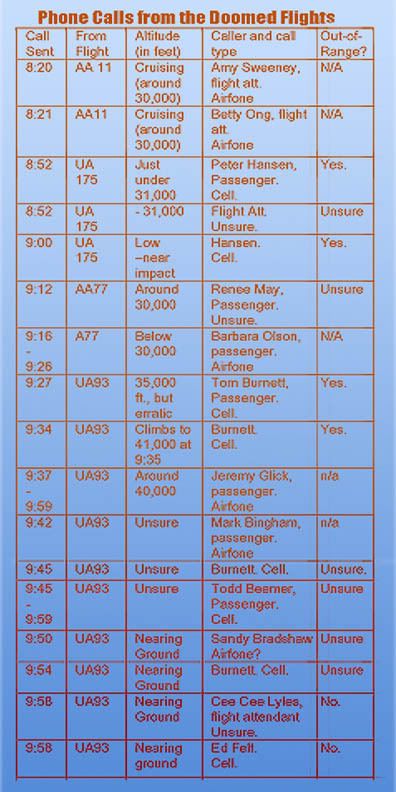
By this analysis, one caller from Flight 175 and at least one from Flight 93 made cell calls from around cruising altitude that should have been impossible. Oddly, these are also the only two callers to achieve multiple calls, all others only getting out one call each as far as I’ve seen. The pivotal Todd Beamer cell call is in the unsure middle ground, with altitude unclear and changing over the course of nearly fifteen minutes with no apparent change in reception. He talked to an anonymous Verizon operator, giving an excellent account of the heroism aboard Flight 93, providing a key element of the official story in a call that is somewhat questionable.
And for what it’s worth, Flight 93 somehow wound up yielding ten times the calls per person ratio of flight 11, with more calls than from the other three flights combined. 93 yielded ten reported calls and seven callers out of only 33 non-terrorist passengers, in a plane that can seat 182. There is no reason to doubt the government’s ability to fake these few phone calls in any number of ways, nor their ability to place them in such a way that they bear all the marks of a genuine call from one of the hijacked flights, cell phone or Airfone. But on the other hand, multiple loved ones were totally convinced - if these were faked they were faked well. There are four possibilities that these calls and transmissions represent:
- a) Audio record real, hijackers present and in charge, and flew their planes into those buildings. Shadow 9/11 is bunk.
- b) Calls real, hijackers on board in a traditional hijacking scenario, with the well-known, widely warned attack then “hijacked” via remote control, leaving the obvious presumption that the Arabs did it.
- c) Calls fake, passengers but presumably no hijackers on board, as in Scenario 12-D. All communications would be cut so the outside world didn’t find out what was really going on inside the plane, and the audio we’ve been presented is entirely faked. In this case, any hijacking attack, as mentioned in warnings, would have been pre-emptively hijacked.
- d) Calls fake, no one on board the attack planes at all. The flights were drones every one, and who knows what happened with the passengers.
- e) Any permutation or combination of these – ex: Flight 93 may have been a real hijacking, traditional or suicide, with the other three planes being drones tacked on to the existing attack, using it as cover while amplifying its traumatic nature. If 93 were a genuine hijacking, it may have even been fitted with a special prototype system like Qualcomm’s to send cell calls as if from the ground to thickly document the real terrorist presence there. The plane was then presumably shot down on Dick Cheney’s orders as it headed to Washington, and was then presumed part of the otherwise faked attack.
And remember, the very integrity of the “new American Century” is at stake here. In scenario d) above, the final fate of the passengers on the attack planes is raised, and indeed there are many convoluted theories out there to explain this. For example, the four flights may have been told of a hijacking threat, crossed radar paths with duplicate drone aircraft, as in Northwoods, as they moved to land at a safe airport. The “rescued” passengers would have been off-loaded, then loaded onto flight 93 and shot down. But Shadow 9/11’s simplest explanation is that they were simply kept on their respective planes, killing two birds with one stone and keeping the evidence consistent.
Thus I can only cite questions about cell phone calls, raise the possibility of faked calls from remote locations, note the telling slant of the audio record toward one flight (93), and finally note that if one call from 9-11 is fake, and consistent with the other calls, then clearly all are fakes. But I can’t prove anything. This is not my field, and the audio record remains the weak point of Shadow 9/11. I’ll leave it to the reader whether to dismiss the whole theory for this flaw or overlook the flaw for the sake of the big picture.
Sources:
For the call chart, I referenced The Terror Timeline (2004) by Paul thompson and the Center for Cooperative Research. I thank them for their excellent work.
[1] Vialls, Joe. “‘We Have a Bomb on Board’ Messages Faked.” September 19, 2002. Accessed Nov. 16 2005 at: http://the7thfire.com/Politics%20and%20History/Faked-Flt93-messages.htm
[2], [4] Qualcomm. Press release. American Airlines and QUALCOMM Complete Test Flight to Evaluate In-Cabin Mobile Phone Use. July 15, 2004. Accessed January 9, 2005 at: http://www.qualcomm.com/press/releases/2004/040715_aa_testflight.html
[3] Chussudovsky, Michel. “Holes in the report, the 9/11 Cell Phone Calls.” Global Research. Aug 10, 2004. Accessed Nov 20 2005 at: http://inn.globalfreepress.com/modules/news/print.php?storyid=723&PHPSESSID=ce62971b5a6eba2e58aa8c0098173a38
[5] Harter, Betsy. “Final Contact” Wireless Review. November 1, 2001. Accessed January 9, 2005 at: http://wirelessreview.com/ar/wireless_final_contact/
Nonetheless, the audio record has its problems: Cockpit audio of the hijackers talking to the passengers was accidentally heard, recorded, and later presented from flights 11 and 93. That both Ziad Jarrah and Mohammed Atta would be able to run the hundreds of controls necessary to fly these monsters into their targets, but then both hit the transmit button instead of the cabin address button seems possible, but a little coincidental on two of the four flights. It seems almost as likely that these oddly feedback-laden transmissions were faked by, as Joe Vialls termed it, “an unidentified “special effects” department, perhaps hell-bent on making listeners later believe that the suitably distorted “guttural” voice belongs to an “Arab hijacker” trying to steal an American airliner.” [1]
Then there are the cockpit voice recordersby which we can normally hear what happened in the cockpit of a crashed plane. Flights 11, 175 and 77 yielded nothing (no indestructible black boxes found for any of them either, which is odd). But 93’s CVR yielded thirty minutes of audio thoroughly consistent with the inspirational official story. Family members of the victims on that flight have been allowed to listen to it but not talk about it. This means either there were hijackers and a cockpit intrusion on Flight 93, or else the CVR was simply switched off, with this recording planted in its memory before takeoff, or somehow faked later.
Otherwise the audio field is owned by phone calls from passenger and crew. The total number of calls to contend with is fairly low; only two to three calls each from flights 11, 77, and 175 have been published to my knowledge, in stark contrast to the flood of ten calls from Flight 93. Some of these calls were sent via “Airfone,” special phones built into and transmitted from the plane itself. They are designed to send phone signals from the air to the ground, offered in lieu of the FAA ban on cellular phones.
Others of the calls were placed via personal cell phones in spite of the ban, and it is to these that we now turn. In July 2004, American Airlines and Qualcomm jointly announced the development of a new technology that allowed passengers on a test flight “to place and receive calls as if they were on the ground.” [2] But what types of calls from the air were possible in 2001? Altitude seems to be the key. Canadian Economist and 9-11 revisionist Michel Chossudovsky explained “according to industry experts, beyond a certain altitude which is usually reached within a few minutes after takeoff, cell phone calls are no longer possible.” [3] This zone of reliability seems to have been about 8,000 feet, with normal cruising altitude around 30,000 feet, and thus, he concludes, “given the wireless technology available on September 11 2001, these cell calls could not have been placed from high altitude.” [4] Wireless Review explained: “Alexa Graf, AT&T spokesperson, said systems are not designed for calls from high altitudes, suggesting it was almost a fluke that the calls reached their destinations.” [5]
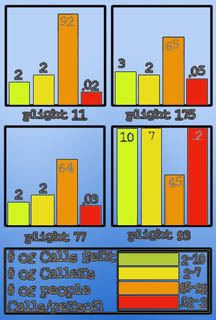 |
And for what it’s worth, Flight 93 somehow wound up yielding ten times the calls per person ratio of flight 11, with more calls than from the other three flights combined. 93 yielded ten reported calls and seven callers out of only 33 non-terrorist passengers, in a plane that can seat 182. There is no reason to doubt the government’s ability to fake these few phone calls in any number of ways, nor their ability to place them in such a way that they bear all the marks of a genuine call from one of the hijacked flights, cell phone or Airfone. But on the other hand, multiple loved ones were totally convinced - if these were faked they were faked well. There are four possibilities that these calls and transmissions represent:
- a) Audio record real, hijackers present and in charge, and flew their planes into those buildings. Shadow 9/11 is bunk.
- b) Calls real, hijackers on board in a traditional hijacking scenario, with the well-known, widely warned attack then “hijacked” via remote control, leaving the obvious presumption that the Arabs did it.
- c) Calls fake, passengers but presumably no hijackers on board, as in Scenario 12-D. All communications would be cut so the outside world didn’t find out what was really going on inside the plane, and the audio we’ve been presented is entirely faked. In this case, any hijacking attack, as mentioned in warnings, would have been pre-emptively hijacked.
- d) Calls fake, no one on board the attack planes at all. The flights were drones every one, and who knows what happened with the passengers.
- e) Any permutation or combination of these – ex: Flight 93 may have been a real hijacking, traditional or suicide, with the other three planes being drones tacked on to the existing attack, using it as cover while amplifying its traumatic nature. If 93 were a genuine hijacking, it may have even been fitted with a special prototype system like Qualcomm’s to send cell calls as if from the ground to thickly document the real terrorist presence there. The plane was then presumably shot down on Dick Cheney’s orders as it headed to Washington, and was then presumed part of the otherwise faked attack.
And remember, the very integrity of the “new American Century” is at stake here. In scenario d) above, the final fate of the passengers on the attack planes is raised, and indeed there are many convoluted theories out there to explain this. For example, the four flights may have been told of a hijacking threat, crossed radar paths with duplicate drone aircraft, as in Northwoods, as they moved to land at a safe airport. The “rescued” passengers would have been off-loaded, then loaded onto flight 93 and shot down. But Shadow 9/11’s simplest explanation is that they were simply kept on their respective planes, killing two birds with one stone and keeping the evidence consistent.
Thus I can only cite questions about cell phone calls, raise the possibility of faked calls from remote locations, note the telling slant of the audio record toward one flight (93), and finally note that if one call from 9-11 is fake, and consistent with the other calls, then clearly all are fakes. But I can’t prove anything. This is not my field, and the audio record remains the weak point of Shadow 9/11. I’ll leave it to the reader whether to dismiss the whole theory for this flaw or overlook the flaw for the sake of the big picture.
Sources:
For the call chart, I referenced The Terror Timeline (2004) by Paul thompson and the Center for Cooperative Research. I thank them for their excellent work.
[1] Vialls, Joe. “‘We Have a Bomb on Board’ Messages Faked.” September 19, 2002. Accessed Nov. 16 2005 at: http://the7thfire.com/Politics%20and%20History/Faked-Flt93-messages.htm
[2], [4] Qualcomm. Press release. American Airlines and QUALCOMM Complete Test Flight to Evaluate In-Cabin Mobile Phone Use. July 15, 2004. Accessed January 9, 2005 at: http://www.qualcomm.com/press/releases/2004/040715_aa_testflight.html
[3] Chussudovsky, Michel. “Holes in the report, the 9/11 Cell Phone Calls.” Global Research. Aug 10, 2004. Accessed Nov 20 2005 at: http://inn.globalfreepress.com/modules/news/print.php?storyid=723&PHPSESSID=ce62971b5a6eba2e58aa8c0098173a38
[5] Harter, Betsy. “Final Contact” Wireless Review. November 1, 2001. Accessed January 9, 2005 at: http://wirelessreview.com/ar/wireless_final_contact/
Wednesday, December 27, 2006
Suited Up for Standard Procedure
To this day, opinions differ as to whether or not scrambling fighter jets was considered standard procedure in air emergencies at the time of the attacks or whether, as Popular Mechanics argued in March 2005, this was something rare and extraordinary. In their cover story “Debunking 9-11 Lies,” they tried to explain NORAD’s delays and failures by pointing out lamely that "in the decade before 9/11, NORAD intercepted only one civilian plane over North America: golfer Payne Stewart's Learjet, in October 1999 […] it took an F-16 1 hour and 22 minutes to reach the stricken jet. […] Prior to 9/11, all other NORAD interceptions were limited to offshore Air Defense Identification Zones (ADIZ). The ADIZ areas seem to be a sort of moat 'round the castle, where incoming international flights are made to identify themselves or risk being taken out. They run along the East and West Coasts and along the Mexican and Canadian borders. "Until 9/11 there was no domestic ADIZ," FAA spokesman Bill Schumann told the magazine. [1]
They would probably have liked to say there were no intercepts at all over continental airspace, but had to cede the one instance after it was pointed out in the factual record by 9-11 revisionists, an errant plane that crossed no borders or ocean shores and yet triggered a fighter escort. On October 26, 1999, famous pro Golfer Payne Stewart was flying in his private Learjet when the cabin lost pressure and killed all on board. The plane continued on autopilot across several states, trailed by fighter jets until it finally crashed in North Dakota. The shoot-down option was publicly addressed at the time: The Washington Post reported “Pentagon officials said they never considered shooting down the Learjet” because, according to a senior defense official, ‘the (FAA) said this thing was headed to a sparsely populated part of the country, so let it go.’” [2] Now, if it had been a hijacked 757 headed for New York after one plane had already crashed into the World Trade Center…
But was this the only fighter intercept ever ordered over the continental U.S.? If intercepts simply weren't done over the mainland, why was an exception made in this one case and this one case alone? Or did they mean this was the only intercept over America that made the news? According to an article in the Calgary Herald-Tribune from a month after the attack, fighter interception for stray aircraft actually was a weekly occurrence even before 9-11: “Today […] fighter jets are scrambled to babysit suspect aircraft or "unknowns" three or four times a day. Before Sept. 11, that happened twice a week. Last year, there were 425 unknowns -- pilots who didn't file or diverted from flight plans or used the wrong frequency. Jets were scrambled 129 times.” [3] Was every one of these 129 intercepts in the year 2000 over the ocean in ADIZ areas, with none over the continental U.S.? And in the nine years before that too, with the exception of one famous golfer?
Common sense and some evidence indicate otherwise. One of the fighter pilots that was scrambled on 9-11 said in a BBC documentary on his first notification of trouble “they said the Tower [was] calling and something about a hijacking. It was flight American 11, a 767, out of Boston going to California. At the time we ran in and got suited up… It's just peacetime. We're not thinking anything real bad is going to happen out there.” The narrator of the documentary adds “neither pilot at this time has any reason to believe that this is other than a routine exercise.” [4]
This was at some point before American 11 ended – we were still in pre-9-11 peace time, if the last minutes of it, and he knew to get suited up (that is, ready for takeoff) in response to the hijacking of a trans-continental flight. This sounds like a routine, standard procedure scramble and intended intercept over continental airspace to me. Perhaps the Payne Stewart case is not so anomalous after all.
Sources:
[1] Chertoff, Benjamin et al. “Debunking 9/11 Myths.” Popular Mechanics. March 2005.
[2] Walsh, Edward and William Claiborne. “Golfer Payne Stewart Dies in Jet Crash.” Washington Post. October 26, 1999. Page A1.
[3] Slobodian, Linda. “NORAD on Heightened Alert.” The Calgary Herald. October 13, 2001.
[4] BBC Video. Clear the Skies. First Aired September 2002.
They would probably have liked to say there were no intercepts at all over continental airspace, but had to cede the one instance after it was pointed out in the factual record by 9-11 revisionists, an errant plane that crossed no borders or ocean shores and yet triggered a fighter escort. On October 26, 1999, famous pro Golfer Payne Stewart was flying in his private Learjet when the cabin lost pressure and killed all on board. The plane continued on autopilot across several states, trailed by fighter jets until it finally crashed in North Dakota. The shoot-down option was publicly addressed at the time: The Washington Post reported “Pentagon officials said they never considered shooting down the Learjet” because, according to a senior defense official, ‘the (FAA) said this thing was headed to a sparsely populated part of the country, so let it go.’” [2] Now, if it had been a hijacked 757 headed for New York after one plane had already crashed into the World Trade Center…
But was this the only fighter intercept ever ordered over the continental U.S.? If intercepts simply weren't done over the mainland, why was an exception made in this one case and this one case alone? Or did they mean this was the only intercept over America that made the news? According to an article in the Calgary Herald-Tribune from a month after the attack, fighter interception for stray aircraft actually was a weekly occurrence even before 9-11: “Today […] fighter jets are scrambled to babysit suspect aircraft or "unknowns" three or four times a day. Before Sept. 11, that happened twice a week. Last year, there were 425 unknowns -- pilots who didn't file or diverted from flight plans or used the wrong frequency. Jets were scrambled 129 times.” [3] Was every one of these 129 intercepts in the year 2000 over the ocean in ADIZ areas, with none over the continental U.S.? And in the nine years before that too, with the exception of one famous golfer?
Common sense and some evidence indicate otherwise. One of the fighter pilots that was scrambled on 9-11 said in a BBC documentary on his first notification of trouble “they said the Tower [was] calling and something about a hijacking. It was flight American 11, a 767, out of Boston going to California. At the time we ran in and got suited up… It's just peacetime. We're not thinking anything real bad is going to happen out there.” The narrator of the documentary adds “neither pilot at this time has any reason to believe that this is other than a routine exercise.” [4]
This was at some point before American 11 ended – we were still in pre-9-11 peace time, if the last minutes of it, and he knew to get suited up (that is, ready for takeoff) in response to the hijacking of a trans-continental flight. This sounds like a routine, standard procedure scramble and intended intercept over continental airspace to me. Perhaps the Payne Stewart case is not so anomalous after all.
Sources:
[1] Chertoff, Benjamin et al. “Debunking 9/11 Myths.” Popular Mechanics. March 2005.
[2] Walsh, Edward and William Claiborne. “Golfer Payne Stewart Dies in Jet Crash.” Washington Post. October 26, 1999. Page A1.
[3] Slobodian, Linda. “NORAD on Heightened Alert.” The Calgary Herald. October 13, 2001.
[4] BBC Video. Clear the Skies. First Aired September 2002.
Subscribe to:
Comments (Atom)


